How Capitão Fausto Helmed Portugal’s Indie Renaissance
“We were starting to discover Portuguese rock from the 60s and 70s that had almost been completely forgotten.”
Words: Fin Harrison | Photos: José Lorvão
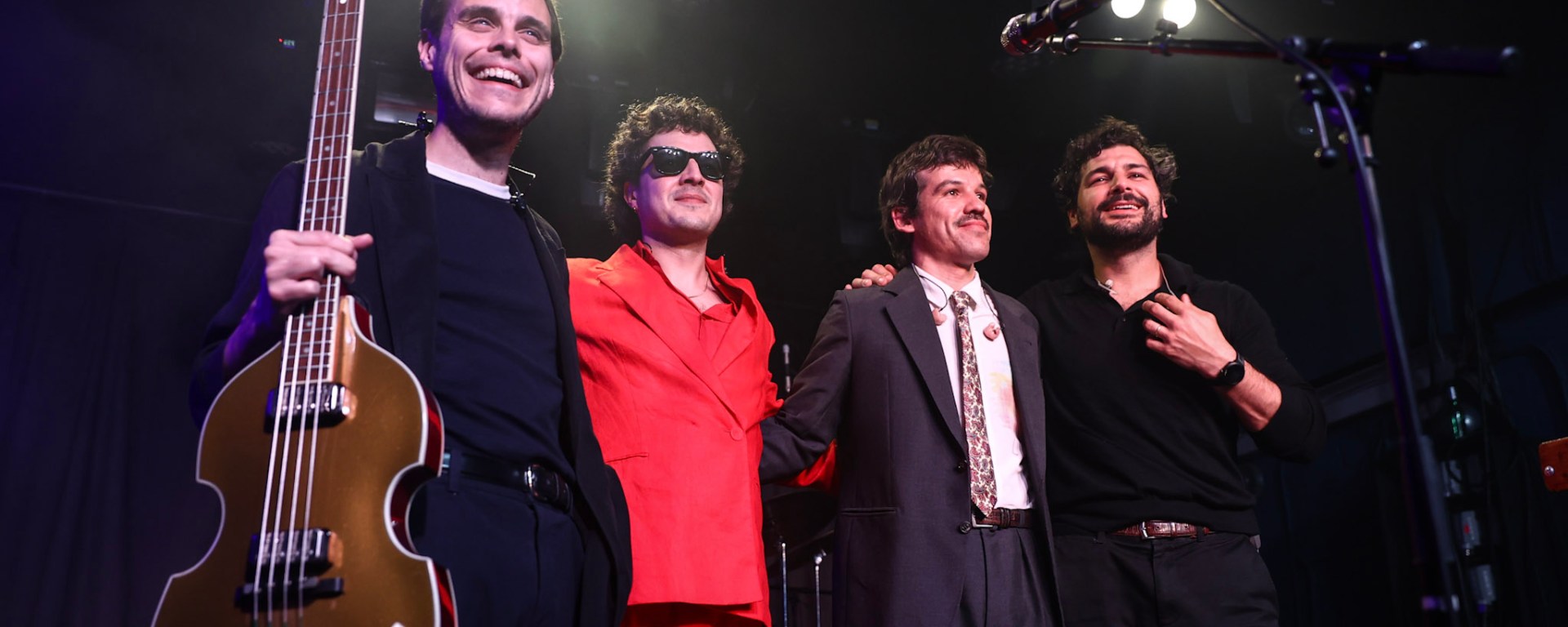
Assembled in 2009 by five seventeen-year-old boys from Lisbon, Capitão Fausto have gone on to play a generational role in reshaping Portuguese alternative music and culture over the past decade and a half. It was founded by Tomás Wallenstein (vocals, guitar, keys), Domingos Coimbra (bass), Manuel Palha (guitar, keys), Salvador Seabra (drums), and Francisco Ferreira, who was the main keyboard player up until his departure in 2024.
Now a four-piece, the band were once anomalous outliers in a diluted, highly commercialised Portuguese pop landscape dominated by formulaic, Anglo-American and Latin chart-chasing sounds. It’s Friday 20th March, and the band are in London to wrap up what’s been a triumphant European tour, seemingly bringing the Portuguese sunshine along for the ride.
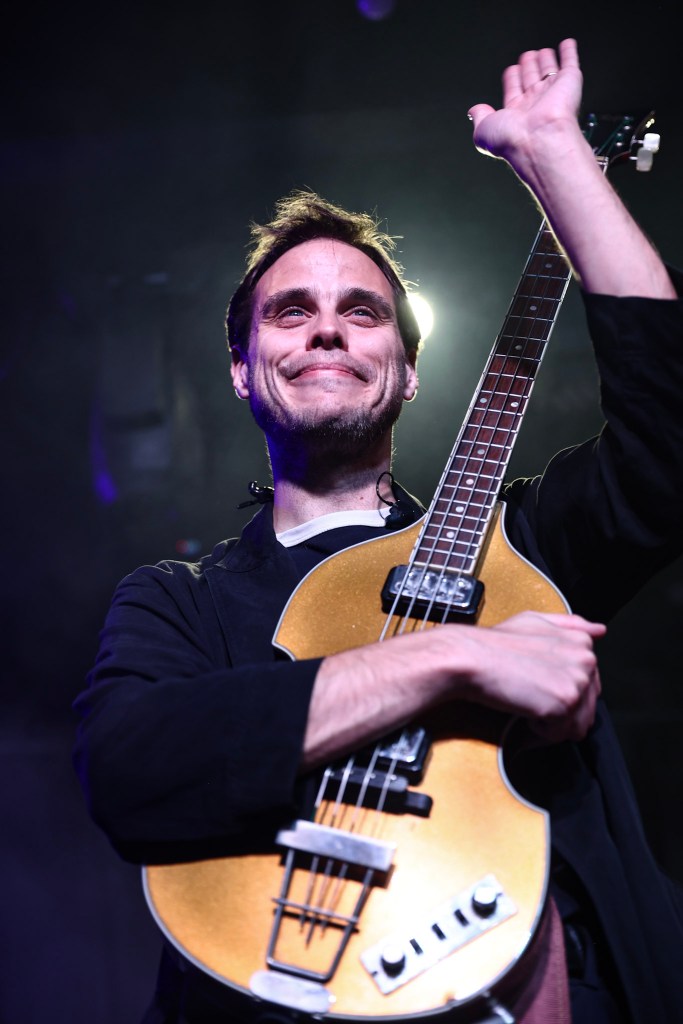
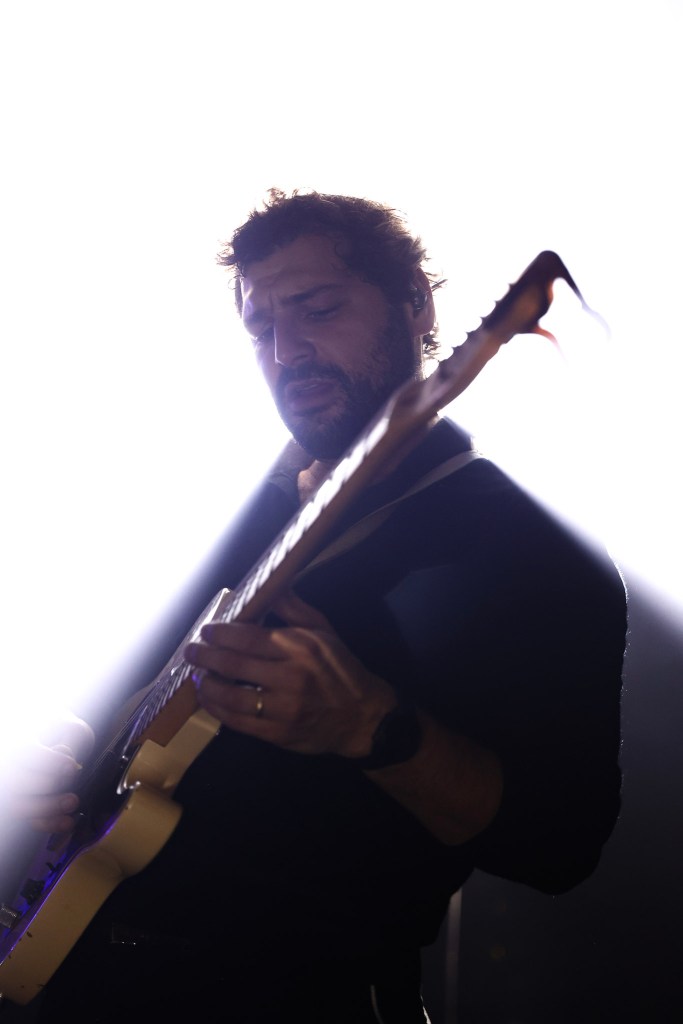
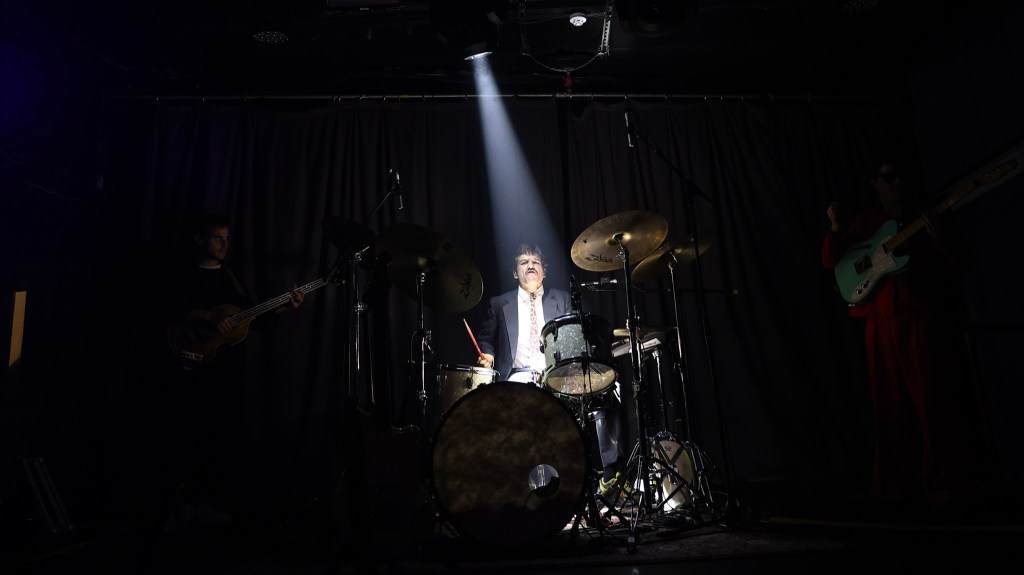
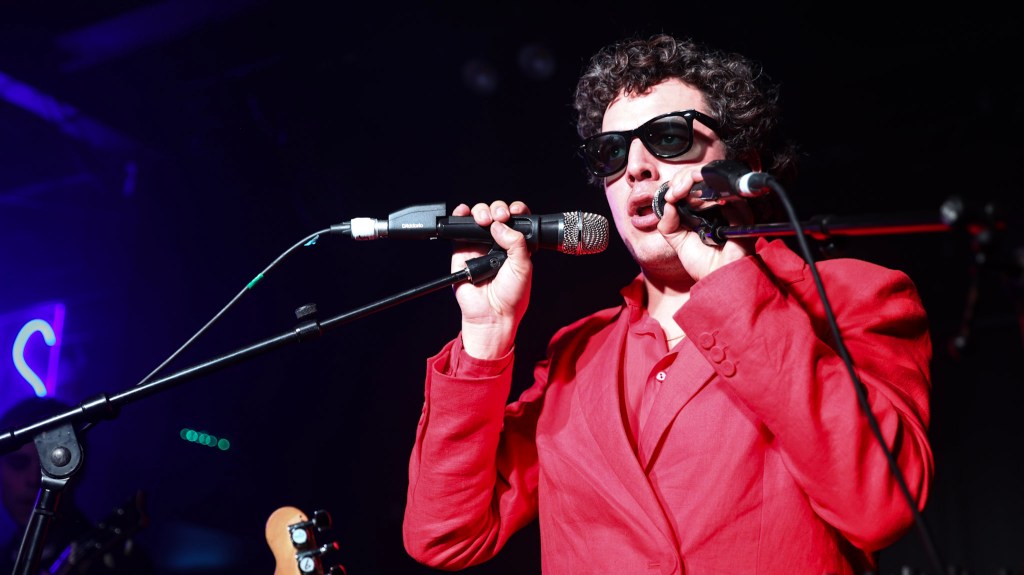
They’re playing a sold-out show at Dingwalls in Camden, where an ecstatic crowd of more than 500 Portuguese youngsters embrace one another, thrilled to sing their hearts out in their own language.
Early in the set, Domingos asks the room: “How many people here don’t speak Portuguese?” This is met with barely half a dozen cheers, as for almost everyone in attendance, the venue felt like a slice of home, from the opening chord through to the post-gig congregation spilling onto the venue’s riverside exterior. A few hours prior to the show, I caught up with Domingos as we stood in one of the venue’s doorways overlooking the Thames.
He’s just finished a soundcheck, which he tells me was a bit wobbly to start off with, but was thankfully sounding great by the end. “We’re super excited to finish up in London. I think the best show of the last tour was when we played at The Victoria in Dalston,” he says. The band have had a tiring but fulfilling European excursion, selling out multiple nights in cities like Brussels that they’ve not previously visited.
Now the most popular guitar group in Portugal since 80s legends Xutos e Pontapés, they reached a new milestone in January when they performed a full-capacity headline show at Lisbon’s MEO Arena, the largest indoor venue in their home country. “After the MEO Arena, there’s been quite a difference in the size of the stages, which has been both challenging and very entertaining. The proximity effect you get from playing these more intimate shows is very important,” he explains. “When the shows keep getting bigger in Portugal, it’s nice for us to keep challenging ourselves and testing our music’s borders.”
“It’s nice for us to keep challenging ourselves and testing our music’s borders.”
Domingos Coimbra
The band’s rise is embedded in a wider story of cultural reclamation. It has seen a new generation move away from stale imitations of US and Latin chart trends, turning instead towards something more rooted, drawing on the 70s psychedelia of José Cid and the 80s art-pop ballads of the late António Variações.
This rediscovery of Portugal’s alternative musical history has been embraced by masses of young people and championed by the curators of Paredes de Coura, the country’s most iconic festival, where the band will be performing for the fourth time this summer. Held in a rural northern forest in mid-August, it is the most celebrated annual event in Portuguese alternative culture.
“We’ve played Coura three times already—four if you count ConjuntoCuca Monga,” he says, referring to the supergroup made up of the band, their label-mates, and a host of friends and collaborators, with whom they performed a chaotic, cathartic closing show on the second stage in 2022, in front of tens of thousands of people.
“The first time was in 2012, when I was 18 years old. We also played in 2019 after New Order on the main stage. I was super scared about that, because they didn’t want to go last, so we ended up closing the stage. We were so nervous, but it was packed, and it ended up being one of our favourite shows of all time,” he continues. “The thing about Coura is that you should always expect to see Portuguese bands there. The curator, Cecília Pereira, is amazing, and you always get cool new acts and great bands.”
For Capitão Fausto, influence was passed down like a family heirloom. “We love Gentle Giant. Tomas’ dad (Pedro Wallenstein) is an upright bass player—he actually played a fretless bass in a jazz-prog band who played at the first edition of Paredes de Coura. He gave each of us a Gentle Giant CD when we were starting the band at 17 years old. We went to Tomas’ car (a Citroën Saxo) and we would listen to music. That band was a real discovery for us because we each had a piece of the puzzle, so we had to connect the dots and study the band,” says Domingos.
His grin widens as he admits that marijuana was also catalytic in this musical awakening, recalling the experience with humour. “Sometimes we’d be in the middle of Lisbon and the cops would pull over. We’d open the car windows and smoke would come pouring out, while prog rock blasted through the speakers.”
Prior to the rise of Capitão Fausto, there was that of Ornatos Violeta in the 90s. “They were a reason why many bands went back to singing in Portuguese,” explains Domingos. “You’d have this curious thing where we were obviously listening to Arctic Monkeys and The Strokes and all the big bands at the time, but at the same time—especially thanks to the download era—we were also starting to discover Portuguese rock from the 60s through to the 80s that had almost been completely forgotten. You had artists like António Variações, Lena d’Água, and José Pinhal, a little bit later, all being re-embraced.”
“Something refreshing happened. In the 90s, most Portuguese music on the radio was sung in English. Then this newer generation started to sing in Portuguese but with musical influences coming in from all over, so it was an interesting mix,” he says.
Their breakthrough album, ‘Capitão Fausto Têm Os Dias Contados’, landed in April 2016. In the wake of the album’s tenth anniversary, I asked Domingos how the band look back on the project that changed everything for them.
“We had to change things for our dreams to continue.”
Domingos Coimbra
“There’s always a ‘before and after’ album,” he explains. “At that time in our careers, we were either finishing university, or unable to finish because the band was already getting big. It was when we collectively decided to become full-time musicians. The title means ‘Our Days Are Numbered,’ because that’s how it felt back then. We had to change things for our dreams to continue, so that album really reflects that era.”
He ties the album’s significance into a broader mood shift happening within the alternative landscape at the time. “You had bands like Tame Impala, White Denim, and others who were revisiting sounds from the 60s. While we were also following that global trend, we were doing that with our national music as well. You had the prog albums of José Cid, for example, who invited us to play a few songs with him about seven years ago.”
He expands: “We were fortunate enough to grow our following substantially with that album, and it put us on the radar all throughout Portugal. The sound has evolved since then because that album gave us the opportunity to play more shows and meet a lot more artists and collaborators. With the 10-year anniversary, there’s going to be a special edition reissue of the album with demos and all the rest of it, and we have other surprises in store for the near future.”
The band’s ambitions extend beyond their work on stage or in the studio. They have a feature-length film and soundtrack coming later this year, and in 2016, they founded their own independent label, Cuca Monga.
The vision for the label was very simple, he tells me. “We were touring all over the country, and we started building our own studio in the Alvalade neighbourhood in Lisbon, where we recorded ‘Têm Os Dias Contados’. We needed a space for some of our other projects, and we thought it would be cool to have somewhere to host other artists and see if we could help them either make the same mistakes we did… or not make those mistakes.” He adds to this optimistically, “Over the years, it’s just kept growing and growing, and now we’re very happy to be able to do that for loads of artists around Lisbon and Portugal at large.”
Fausto are at the forefront of a growing indie scene in Portugal, with their label-mates Ganso also rising sharply in popularity in recent years. Another strong example of the home-grown indie movement has emerged from SMUP, a music venue and community centre in the heart of the coastal town of Parede, just outside Lisbon. All singers and multi-instrumentalists, Filipe Karlsson and his brother Carl, Velhote do Carmo, Kyle Quest, and Martim Seabra are just a few of the local talents who have captured the attention of young audiences over the past decade, both individually and collectively as the cult skater-rock outfit Zanibar Aliens.
“Their first tour was opening for us around Portugal. We invited them along. They were like 15 years old and played amazingly,” Domingos recalls.
“So what other Portuguese artists should people be paying attention to?” I ask. “A great band, who have also toured England, are MAQUINA. They’re unbelievable. There’s also a great group from our record label called Rapaz Ego who have some great songs. Then you’ve got bbb Hairdryer, who are very noisy, and Marquise—really young guys from Porto. They’re great. I think bands and guitar-based music in general are making a comeback.”
In spite of the growing appetite for home-grown music within the alternative space, the climate remains extremely tough for emerging artists in Portugal, with the country’s grassroots music industry facing a similar post-pandemic crisis to that taking place across the UK. “These spaces are super important,” he says without hesitation. “There’s the appetite for bands, like I said—that’s come back. The problem we’ve seen after the pandemic is that so many of the small venues and clubs are closing, so new artists are finding it increasingly difficult to leave their cities. They will play in their hometown, but it’s very hard.”
He continues: “We’re seeing this problem with pretty much all the artists on Cuca Monga. We have to really put the work in to get them on tour because there are maybe ten to fifteen clubs across Portugal. Outside of that, you’ve got the festivals, which are really competitive, so the smaller artists struggle a lot to get their foot in the door.”
For Capitão Fausto, the venue that became their de facto training ground early in their career was Musicbox in central Lisbon, which provided a launchpad for many of the city’s different emerging scenes and genres up until its closure in September 2025. “I think I’ve played there about 40 times,” recalls Domingos. “Now that part of Lisbon has become completely gentrified, there’s nothing going on there.” However, the venue’s owners have opened a new venue, appropriately called Casa Capitão, where many Cuca Monga-curated nights take place.
The band’s music and vision continue to ripple through Portugal’s indie scene, infused with a sense of saudade connecting a new generation of artists to the country’s musical past and its audiences today.