
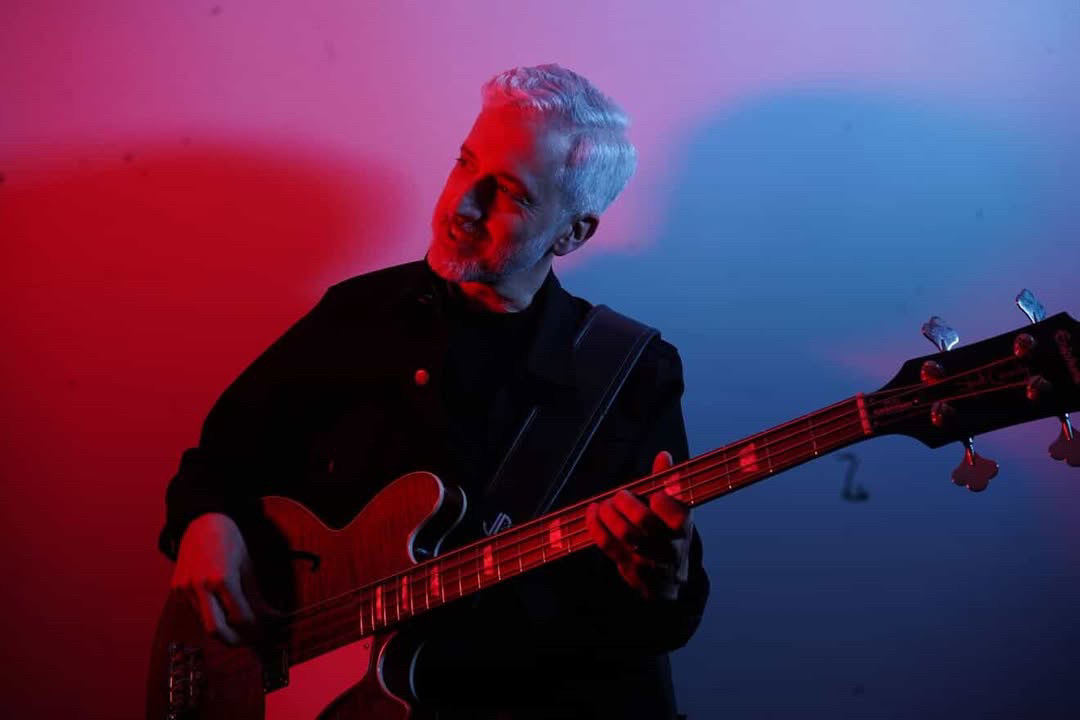
“I really appreciated the brilliance of the music when I started learning it.”
Words: Fin Harrison | Photos: Keira Oldfield
Since 2022, Performance course leader Andrew McKinney has balanced his role as a lecturer at BIMM with life as the bassist of Pulp — including a world tour that’s taken him from a secret set on Glastonbury’s Pyramid Stage to co-headline shows with LCD Soundsystem at the Hollywood Bowl, as well as headline dates at The O2, Hillsborough Park, Finsbury Park, Red Rocks Amphitheatre and Glasgow Green. No big deal.
After working with Jarvis Cocker on his solo recordings and tours since 2015, Andrew was among the first to learn of the iconic Sheffield band’s reunion and was present from their first, closely guarded rehearsal. He also became part of the gradual, piecemeal process that shaped More. — the band’s comeback album, released in the summer of 2025.
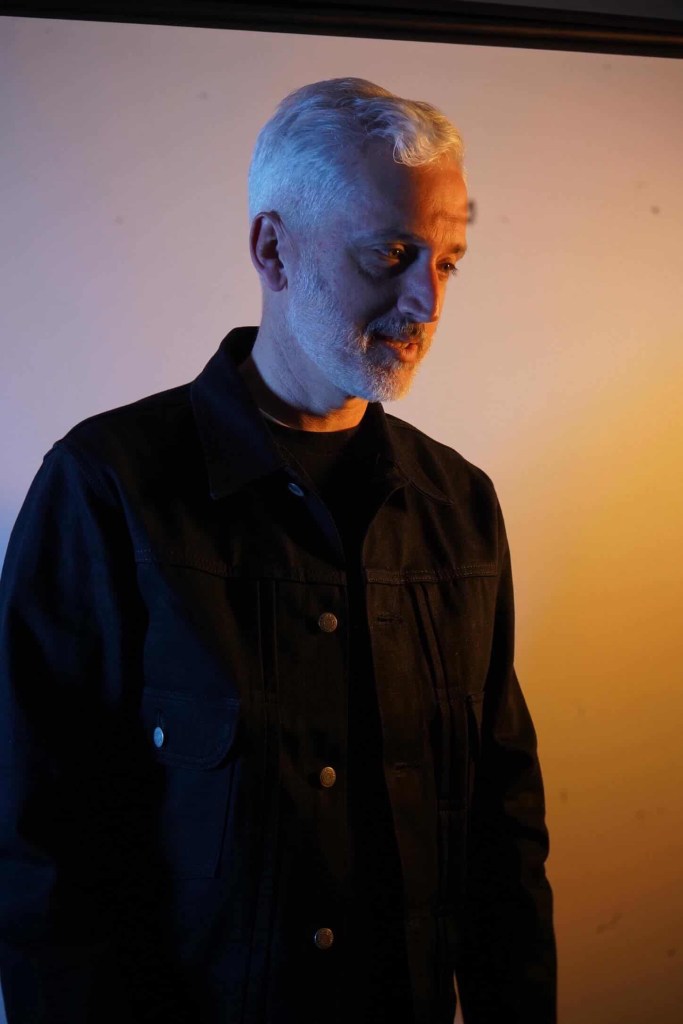
The tubes are on strike, so rather than meeting him on campus, we opt for a catch-up over Zoom instead. Originally from Horsham in Sussex, Andrew speaks to me from his home in Ealing, where he has been based for nearly thirty years.
I begin by asking about his introduction to music; “The cello was my first instrument, then I picked up a bass guitar to join my mate’s band when I was 14.” He explains. “The first band I joined, the other members of that are now in a band called The Feeling. When I was 18 I went to music college in London at a place called Basstech, which was not too dissimilar to BIMM.”
He continues, “I was still in bands with a few people from home, and got a few opportunities while I was at college. By the time the course finished I was doing ok, playing in function bands and doing sessions and stuff.”
His first “lucky break” came shortly after leaving college, as one of the function bands he was playing with got asked to be the house band on a Channel 4’s The Richard Blackwood Show, which aired between 1999 and 2001. “It was like a chat show / comedy show. We were like The Roots on Fallon but not quite that cool.” He jokes. “We managed to fluke this gig and ended up playing with all these cool pop and hip hop acts like LL Cool J, Flavor Flav, Public Enemy, Mos Def. All these really cool people, it was really good fun.”
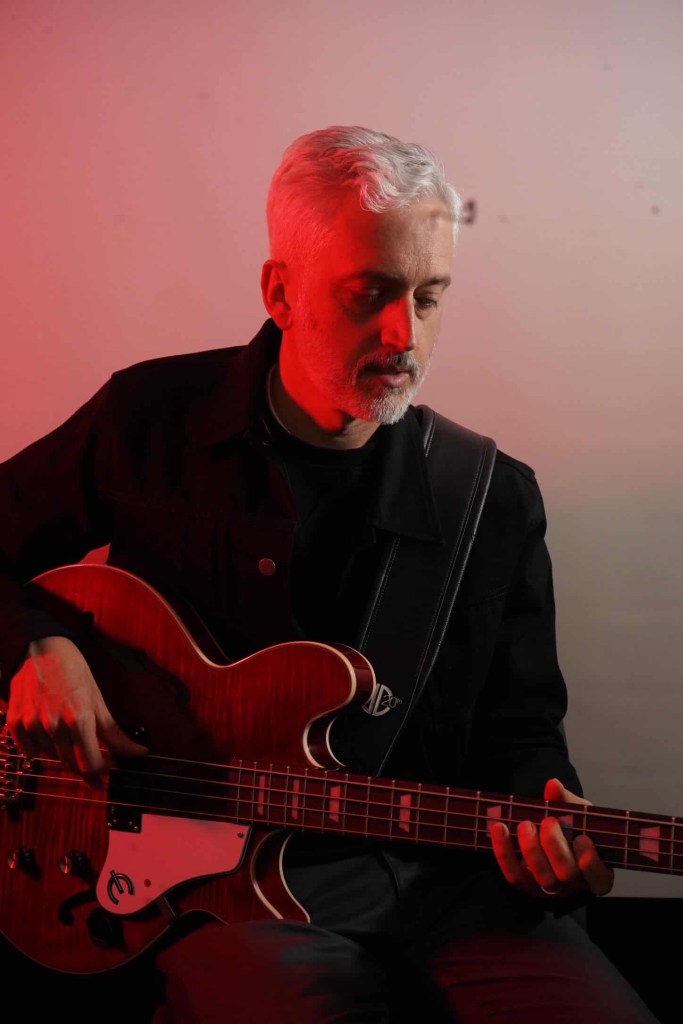
Andrew has grown to love and appreciate Pulp since learning their songs for the tour, but in the ’90s he was part of a very different scene, which led him to join jazz-funk collective The James Taylor Quartet. “In the 90s I was really into what they called “acid jazz” — The most famous band in that genre being Jamiroquai. That really got me into jazz funk stuff. I was playing a lot as a session musician and met a lot of people, and I ended up doing one function and meeting some of the guys who were in the James Taylor Quartet. I ended up playing with them and have done so since around 2006.” He explains.
“I was in sixth form college around the time of the Britpop chart battle between Blur and Oasis. I had kind of disappeared into a more jazz-funk trajectory by then. When it came to actually playing with Pulp, that was quite a big change in direction for me. I wasn’t an established fan, but obviously I am now. I only really sat down and listened to it consciously when I started playing it.” He goes on, “The first song I looked at in more detail was Babies, and when I listened to it in more detail, the hairs stood up on my arms. I realised how good and significant this was. I really appreciated the brilliance of the music when I started learning it.”
Andrew explains that, having been gigging with Jarvis for around half a decade, he found the process creatively rewarding and is proud of the records they made together. However, he also admits that, at times, he yearned for the chance to launch into Common People and absorb the reactions from the large festival crowds. “When Jarvis asked me, I thought yes! Finally I’m going to get to play those songs!”
Detailing the early stages of the comeback, Andrew reveals “At the start, it was all a bit secret. I think Jarvis wanted to make sure it was going to be ok before announcing it. There were six of us in this crap little rehearsal room in November of 2022, and the first show was in June the following year. When Jarvis rehearses, he practices his performance and gives it the full amount of effort he’s give to a concert, It’s never done in half measures. So the six of us were in this tiny rehearsal room blasting out Disco 2000 and there was a window open. I can’t imagine what people walking past must have thought if they’d heard that!” He recalls.
“Some of the guys in Pulp had taken a bit of a step back for a few years. I guess they might have felt a bit rusty or whatever which is why they wanted to take it slow with rehearsals and stuff. Myself and Emma were very used to working with Jarvis but hadn’t worked with Nick, Mark or Candida before. We all got on fine, there were no issues. But to feel relaxed and confident in each other’s company takes time. I think Jarvis likes to approach Pulp in a really familiar way. He’s very loyal, and has the same people who have been working with him for years. So when we go away together there’s that real sense of familiarity.” He reveals.
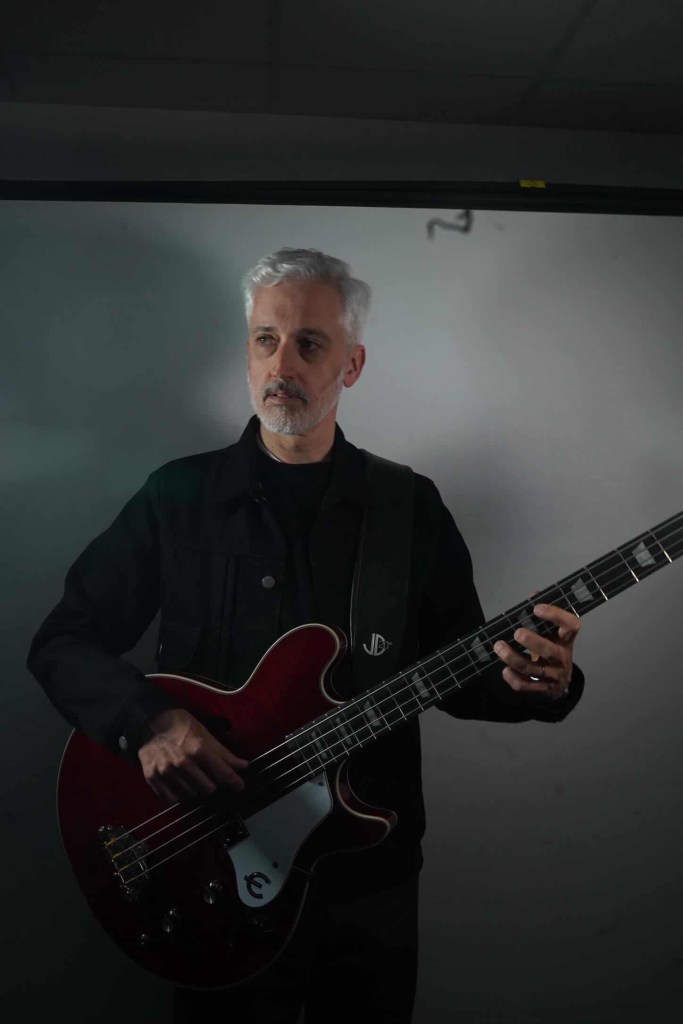
Asked about how the reunion ultimately came together in the making of the new record More. , Andrew tells LDN: “When we first started we didn’t do any new songs, we just played the hits. We played 15 dates or so, and we also had this song called Hymn of The North that Jarvis had written for a play or something.” He expands, “Whenever you work with Jarvis, he never comes in and declares that he’s got a fully formed song written or anything like that. It’s always like an idea, or a feeling. He likes to work in a band context and try things out. We played Hymn of the North and it seemed to go down well. When we continued into 2024, at the start of that year Jarvis said ‘well why don’t we try and do some other new songs, and if it’s no good then nobody needs to hear about it’”.
From that point on, whenever they rehearsed together for shows, they also tried out new sounds and ideas, and over time realised they had enough material to make an album. Still, a comeback of this scale would always carry the risk of tarnishing a legacy of such cultural importance. “It was probably easier for me than it was for them.” Andrew admits, “It was very much a process of seeing where things go, and seeing how people feel about it. It was never like going in there on day 1 and saying “Right, we’re gonna do a new album, and It’s got to be a success” or anything like that. We inch forward, and as long as it sounds good and everyone’s happy with it, then it sticks.”
Asked what were some of the personal highlights from this experience, he says Tiny Desk was a major bucket list moment, and recalls playing the O2 Arena on the second of two sold-out nights on his birthday. “All my friends and family came down and Jarvis led 20,000 people in singing happy birthday to me. It was sort of excruciating, but quite amazing as well. I didn’t know what was gonna happen until I walked out on stage and saw “ANDREW’S BIRTHDAY” on the setlist.”
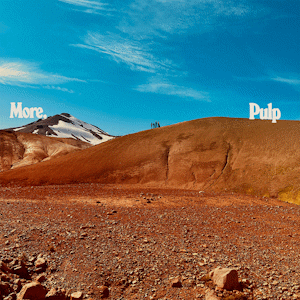
More. Released June 5th 2025 via Rough Trade
Asked about switching between the worlds of Pulp and BIMM, Andrew tells LDN that while the highs of touring with Pulp are unmatched, he enjoys being able to slip back into the routine of teaching after being on the road. “The consistency of lecturing at BIMM is, for me on a personal level, quite a good thing. A musician can come off tour and have all this time, which can be really disorienting. Whereas I can slip back into a routine quite easily when I have this to come back to.”
He adds to this, “Sometimes coming down after a tour is a bit tricky. The last show we did in America was in Los Angeles at the Hollywood Bowl with LCD Soundsystem. My wife came out and we partied with them, and it was amazing. I think I was probably having ideas that were slightly above my station, and then I was back on the Sunday, cycling to BIMM at 8am the next day, which was quite a strange thing to have to adjust to – but I like my job, and I think it’s really good for me.” We conclude by asking about the future of Pulp. Will there be more after More.? Keeping his cards understandably close to his chest, he simply states: “I’d like to do five Pulp gigs a week, but I’m not sure what the rest of them are thinking in that regard.”

